The Chronology of Water is Lidia Yuknavitch's sexy, dirty, wordy, wet memoir. Lidia is not that much older than I am. Is it time for us to write memoirs? 


In a connected world, where every place is right next door to every other place via cell phones, airplanes, and the internet, it was really lovely to read a novel that was truly of a very certain place. The Widow and the Tree takes place in extremely rural Alabama, and the disconnected nature of the location separates the reader from any particular time, or any invasive modern influence. Without the ringing, buzzing, and informing, what's left is a quiet book that ends up booming, a small story that resonates.
Water for Elephants was a runaway bestseller, a breakout book for author Sara Gruen, and a book club darling. The comments you hear in reaction to this book range from "Loved it" to "It blew my mind, changed my life, and I chewed my own wrists open when it was over." Not everyone likes every book, but I have to say that this one has met with universal approval from readers of every stripe. Writers, take heed. Water for Elephants is more than a good story; it's a seminar in technique from which aspiring writers could definitely benefit.
Lucy Corin's first novel, Everyday Psychokillers: A History for Girls, published by FC2, begins as a wild, unapologetic mess. The story of a young girl in southern Florida, Psychokillers reminded me initially of Lynda Barry's Cruddy, Kathy Acker's Blood and Guts in High School, or a number of other ragged, jagged narratives yanked out of confused teenaged women. It's messy in that way, in that essentially female way, and its zigs and zags are almost familiar to me, this unpredictable, non-linear tempo.
It's the kind of book that leads reviewers and jacket copy writers to create lists of disparate elements: a Ted Bundy reject, the God Osiris, a Caribbean slave turned pirate, a circus performer living in a box, broken horses, a Seminole chief in a swamp, and a murderous babysitter. And the book is good in this way; it's inventive, fresh, out of control. You spend most of the first half asking yourself, "Where is she going with this?"
But ultimately what's interesting about the book is not the way it's fragmented. The story is told in mad, intense chunks, increasingly so disconnected from the central narrative of the young girl. We go from a fairly chronological account of a home life, a school life, of this main character, into digressions that start as anecdotes or asides from the character herself and evolve into separate stories -- stories of death and killers, murders, fear. That aspect of it is great, and Corin pulls together a very bold collage.
The interesting thing, though, is how it isn't fragmented, how the book spirals back on itself, revisiting ideas, images, and even sentence structures, so that while in some ways time, characters, and realities are fractured, the idea of the book spirals inward to a point, and comes together where the book blows apart. There are six or seven absolutely tight and monstrous pages toward the end that clearly express the book's central theme. I realized, reading them, the path I had to take to get there, to be told I am a killer, and that I am being killed, and that both are me. That realization is at the center of the spiral.
Looking at it from the top, a spiral moving outward looks the same as a spiral moving inward. It's not immediately obvious how Corin's book functions in this way, but the destination is worth the journey, and the investment in the book, you will find, sneaks up on you. Along the way, you'll find chapters that work as short stories, you'll see a dazzling slideshow of images you definitely have not seen before, and you'll find yourself falling into suspense over this character. Yes, in the middle of a novel built of formal experimentation, you'll be worried about this girl, and the question central to her psycho psyche -- will she kill or be killed?

For its second offering to the hungry world of literary fiction, Ninebark Press brings us Alta Ifland's short story collection, Elegy for a Fabulous World. From the very first story, Ifland had me in her grasp with merciless, darkly funny tales from her childhood in communist Ukraine. In bleak, unapologetic images, she shows us the gypsies that camped outside her town, the gravedigger the children all harrassed, the way the trash collectors failed, and the magic of one coveted bottle of Coca Cola. You can read the titular story online at AGNI Magazine. Not my favorite example, but the strange picture of what constitutes a seaside vacation for Soviets will give you an idea of what the rest of the book has to offer.
Ifland's gift is control. She shrugs at absurdity with the measured pace of a female Nabokov. Yet just as you're sinking into a mild rhythm of predictable slice-of-life revelations, she jerks the image just a bit, skews it enough to remind you: this is foreign. So, the mute adopted sister you're accustomed to seeing, with her iconic silence and her mild beauty, may not stop as a symbol of some unknowable aspect of childhood. She may suddenly go jetting off into space as the story takes a sudden flinch outside the deftly drawn limitations of the village, the family, the characters, the way of life. Ifland injects just enough of these blank surprises to elevate her work from competent memoir into the realm of contemporary craft.
The second half of the book delivers more typical contemporary short stories. Well crafted, interesting, satisfying, but lacking the depth and impact of the first section.
A few stories into the collection, when I was so enchanted with the voice, the landscape, the complex dark shadows of it, it occurred to me how impossible, how thin it would all seem if these same stories were set in modern times, in the loud, plastic American world. Is it possible for her, I wondered, to create this same kind of elegant starkness without the exterior starkness of village life, without cell phones or televisions or that brisk cacophony a more contemporary set of characters would be wading through. There's a timelessness to the childhood that Ifland renders that would be, maybe, fractured by the introduction of technology, information, something faster and less private. The second half of the book answered, to some extent, my question, as the stories that took place in office buildings and other less austere locations didn't have the same effect on me as those in the sort of anti-fairytale settings of the earlier pieces. So the mute sister could only fly away into space out of the house without wires attached to it, and the man crying in the graveyard could only be as profound if his life existed in rumor and legend, instead of a newspaper story.
The best thing about the book is the way the identities shift and change, particularly the mother and the main character herself. One can find these common characters in the earlier stories but not necessarily pin down a "she" throughout, or even an "I." A great example of this is a story where the main character takes her husband back to the old country to meet her parents, whose desire to feed him and nurture him and impress him with food nearly kills him. Her return to her homeland, accompanied by the uninitiated American, made me think of my experience reading the book, how hopeless it was for the husband to understand her family, or for her to show him to them properly. Ultimately, there is only the reality of what they are, and what he is, physically, to show for it. And this was what impressed me about Elegy for a Fabulous World. Ultimately, it is in surreal images and what facts and memories can be clearly delivered that this other, fabulous world exists. And if this old, communist life can only be understood in fragmentary, shifting narratives, looped through with the myths of the old country and the realities of the new, then Ifland's atttempt is a success.
For more information: Purchase Elegy for a Fabulous World, visit Alta Ifland's web site, read more about Ninebark Press.

Myla Goldberg's novel, Wickett's Remedy, begins pleasantly enough, as a quaint period piece about a young girl in the early 20th century, escaping South Boston to experience big city life as a shop girl selling men's shirts. Lydia Kilkenny finds love, gets married to a medical student, and sets up house. The narrative is augmented by marginal notes in the point of view of ancillary characters, and newspaper articles and editorial letters from the time, and other snatches of dialogue.
Then the Spanish Influenza happens. The book stops being cute, derails itself from a nice little plot about a ghetto girl who conquers the world, and heads into dark and dangerous territory. Now the marginal notes, the newspaper articles, and disembodied dialogues and unexplained bits of correspondence become sinister, threatening, and the main character, who had seemed a little too sweet, too plucky, too dear, is now our only hope. The book was extremely moving, after things got dire. Once I got to the awful part, I could hardly put it down. The multiplicity of voices becomes part of the story itself, as if the only way the unfairness, the starkness, the confusion of the times could be portrayed is through this fragmentation of the narrative.
Goldberg illuminates a world of which I had absolutely no knowledge, no experience. One third of the world's population was infected with this flu. The mortality rate was 10%. That meant that more than 3% of the world's population died of this disease. Seventeen million in India. Six hundred thousand in the US. The most gruesome fact of the pandemic was that the disease killed strong young adults more effectively than the old or young, because the stronger your immune system the more violently the disease came on. Truly horrific. And the things that happened on the Navy ships. Goldberg hints at horrors, via snatches of dialogue and reports, that defy belief.
I highly recommend Wickett's Remedy to anyone who has been loudly panicking about the swine flu, has felt themselves put upon and afflicted by this outbreak, or has been walking around in a face mask. The things Goldberg will show you will make your life in 2009 seem like a paradise of health and vigor.

made of the mystery in the extremely elaborate, very intelligently wrought story that drives the book. Go here if you've read it and want to ponder all its intricacies. It involves an inheritance, a murder, and a whole lot of family tree.
I just can't hang. I don't know what happened to me. I want to say that when I was 23 I could tolerate or even enjoy these books organized on the principle of "what the hell." These novels that challenge what it means to be a novel, characters who defy the idea of a character, whose authors seem to make decisions because they're the ones holding the pen, and tee-hee who's going to stop them?
The first book I read by Jack Pendarvis was Your Body is Changing, a collection of short stories. At first, I was really digging it. Yes, it tended a little toward the type of story collection that holds up one character after another saying, "Look at this idiot! Okay, now look at this idiot! Isn't he a tool? Now check out this guy -- what a tool!" But it was really imaginative and interesting. I particularly liked the story "Outsiders" about a woman who announces constantly that she's really someone who will "call you on your shit." Then I got to the title story, about an adolescent zealot who comes into age and cynicism in various har-har ways. And I started to wonder, is Jack Pendarvis one of those guys? One of those guys who produces desultory idylls revolving around randomness, irony, and a wry, intellectual detachment? One of those McSweeney's type guys? When the main character set off on a cross country journey in a goat cart, I had to face the truth: Jack Pendarvis is one of those guys.
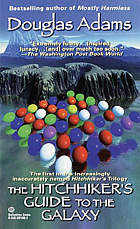
Right after I had finished reading Awesome, a friend loaned me The Thirteen and a Half Lives of Captain Bluebear. It was through realizing the proximity of the latter to The Hitchhiker's Guide that I realized the proximity of Awesome to this iconic work, and so I have to admit: There may be people out there who will find this book to be gorgeous, revelatory, and profound. I am not one of them. However, I salute MacAdam Cage for publishing it, I salute Pendarvis for writing it, and I'm glad it's out there on the bookshelves, in all its weirdness, in all its belligerent quirkiness, because the world doesn't need another mild romance, and Jack Pendarvis ain't no Nicholas Sparks.
There are two fine lines that Abbott had to navigate when writing Sin in the Second City, a historical account of the Everleigh Club, the fanciest and most infamous brothel in Chicago at the turn of the century.
The second line that Abbott dances down is a literary one. She is, of course, telling the true story of actual people, and the research that went into this book is amazing. One look at the bibliography and your jaw will drop. However, there are things that cannot be known from research. The biographer's job is to tell the story in an engaging way that will live on the page, without embellishing the facts too much, to navigate between too strict a focus on reality and too fanciful an elaboration. Abbott accomplishes this brilliantly. Everything in quotation marks, in the book, was actually said by the real Everleighs, or other characters, and recorded in court documents, journals, or letters. But Abbott's story goes beyond the bare facts and delivers a prose that reads like fiction. None of the "we can't possibly know" or "it's unclear" but loads of vibrant descriptions, delightful details, and a narrative sense that really brings the landscape of the levee to life.
Since I have been writing about American Idol for two days, I feel the need to elevate the tone of this blog a little. Of course John Irving called this book "entertainment" as opposed to "literature." I'm not going to get into it with John Irving on the merits of various books. John Irving and I have never had a problem before, in all the many times we've exchanged thoughts on art and pop culture.


When Joshilyn gave me this book, a long time ago, she said that it was really two books mashed into one, and she felt sure I'd like one of them. I know I liked the second half much more than the first. So much did I not like the first half that I actually put the book down for more than a year. I liked the present sections more than the past, the dog sections more than the human. Which were the two books? I'm not sure. I picked it up again because I finally succumbed to the hook, and had to know how it ended.
Maybe the choice to put the novel in first person was correct, because as it is now, the husband is really the main character. Maybe any other method would put Lexy right into the spotlight, like every other book about a beautiful madwoman. Maybe this is Wuthering Heights from the point of view of Edgar Linton... focusing on a character who typically falls into the background. The one who appreciates the wild horse but can't really handle it. The one who lives to tell the tale. 
Wow. I look at my little children, who refuse to eat half the things I put in front of them just because the whim of the moment dictates that they don't like orange food, or that they would rather have peaches than grapes, or that they really wanted a PB&J instead of spaghetti. And here is this mother, in this book, watching her children literally die of starvation (and disease, and malnutrition, and whatever else is crawling around in the poverty they inhabit), and there is nothing she can do about it. Living in fleas, in filth, in actual unmitigated poverty of the kind I have never seen in this country, she does the very best she can, and you know what? So does the father. He is a scoundrel and a failure, but he is in a category of man with many others, and no matter how I tried, I could not hate him, because I felt he loved his chilren, and he always gave them his share of the food, and even though he drank every cent that ever came into his pocket, he was not to blame for their troubles.
Rather than making the facts of the book more palatable, because the character knows no better, this way of narrating the story actually makes it the more horrifying, because there's no author to step in and say, "And that's just how poor we were, that we had to burn the walls of our rooms, how sad, how dreadful." Which leaves the reader to think it. And there's no author to say, "And with that one line of Shakespeare, the whole possibility of language as art was lit up in me," it's left to the reader to discover that connection for himself. 
"Deaf to my silence"? That's one of those lines that sounds complex and interesting, but in reality means nothing. Like Juliet Binoche again. She can be thinking of her grocery list, but as long as she fires up her "piercing depths" eye lock, you'd think she was decoding the fate of the world. Hart knows how to ratchet up the drama in the way a scene sounds, even if the plot is really a rather standard soap opera chain of events. Adultery, death, rivalry, hatred, love, etc. The pounding drum in the language, the constant syntactic reminders that This! Is! Dramatic! actually diffuse the drama from her character's troubles, much the way a soap opera's soundtrack can make light afternoon fare out of murder and betrayal.