Pages

Showing posts with label books. Show all posts

Saturday, March 21, 2009

Surviving The Quincunx by Charles Palliser


Yesterday, watching CNN, I saw a feature piece about a man who has been feeding the homeless daily out of the back of his truck in a Queens neighborhood for ten years. I found myself astonished that such a man could exist, that such selfless charity could be going on. Surely he must have some hidden motive, some personal failing out of which this commitment has arisen. He can't be just a NICE GUY doing a NICE THING for people in NEED. Of course, he can. He does. Nice people do nice things all the time with no hope of personal gain, no secret, devious agenda. I just had a hard time believing it.

I blame Charles Palliser, and his novel, The Quincunx, which I have been reading for about a month. This 800 page behemoth of a Victorian novel (neo-Victorian? 1989) drags its readers and main character through every milieu of horror, every site of human want and degradation, through the most wretched poverty, the most abject misery the 19th century had to offer. And of course, the 19th century offers plenty. Feel like you've been there, done that? After all, you've read Dickens, right? Seriously, this is Dickens on crystal meth. Imagine the nightmares of Dickens, but without the comfortable distance of Dickens' hyperformal language. And imagine that everyone, everywhere, is purely selfish, purely wicked, and does nothing for any reason but blunt personal gain. The protagonist of this novel, who starts out a boy and ends up a much thinner, much more suspicious boy, lives through every possible awfulness of the time, from agricultural slavery to being a knife-and-boot boy, to various murder attempts, and many, many, many betrayals. Everyone who appears to be trustworthy is false. Everyone who offers love is immediately killed or destroyed.

It is BAD. It is bad in early 19th century England. Very very bad.

However, I am glad I read it for two reasons.

First, if I'm ever tempted to be one of these people who says, "How dare the government take my money to give it to poor people? Leave that to the churches and to my personal charity!" I have only to recall what the churches and individuals of the time were able to do for the working class when the industrial revolution was just beginning, when common lands were being fenced and sold, when there were no legal protections for children, no laws governing labor, no laws governing housing standards, etc. Individuals and churches I'm sure did a lot for a lot of people, but it wasn't enough, given the grinding, irresistable motivation of people to get more money, more power, more property. You could read this book and come away saying, "Wow, the poor in this country really have it made." And I say that's a good thing. I don't want to have to step over dying people and starving orphans. Paying taxes will be just fine, thanks. The thing is, and this is what became clearer to me while reading this book, that without public education, school lunch programs, health care, and other entitlements, there truly is a caste system from which there is no escape. Without money, you can't get money, and you are just trapped. Palliser is a scholar, and he researched the book for 14 years. He's truly captured the period, and seeing it played out before you in such lurid and exacting detail is so much more compelling than reading about it in facts and figures.

The other reason I'm glad I read it is that it was a great read! I was completely fascinated by the time I was ten pages in, and the story just grabbed me by the collar and railroaded me right through to the end. It was almost un-put-downable and I spent many sleepy mornings having stayed up way too late the night before. It is *not* a morality book, although I've spent time talking about that aspect of it. I haven't talked about the plot at all, but much has been made of the mystery in the extremely elaborate, very intelligently wrought story that drives the book. Go here if you've read it and want to ponder all its intricacies. It involves an inheritance, a murder, and a whole lot of family tree.
If you do decide to read The Quincunx, make sure you have some time set aside to cope with obsessive reading. And it might be good to take this one on in the summer months, when you can go outside periodically and remember that life is good, that people can love, and that redemption is possible.

Jack Pendarvis is One of Those Guys

I just can't hang. I don't know what happened to me. I want to say that when I was 23 I could tolerate or even enjoy these books organized on the principle of "what the hell." These novels that challenge what it means to be a novel, characters who defy the idea of a character, whose authors seem to make decisions because they're the ones holding the pen, and tee-hee who's going to stop them?

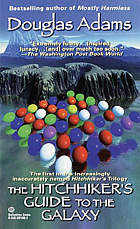
I know I dated guys who wrote books like this when I was in my 20s. But I also remember putting down The Hitchhiker's Guide to the Galaxy as a child, and only part of the reason was because I thought the sacrilege would send me to hell. I have a feeling that if the narrative truly compelled me, I would have dared to face the consequences.

The first book I read by Jack Pendarvis was Your Body is Changing, a collection of short stories. At first, I was really digging it. Yes, it tended a little toward the type of story collection that holds up one character after another saying, "Look at this idiot! Okay, now look at this idiot! Isn't he a tool? Now check out this guy -- what a tool!" But it was really imaginative and interesting. I particularly liked the story "Outsiders" about a woman who announces constantly that she's really someone who will "call you on your shit." Then I got to the title story, about an adolescent zealot who comes into age and cynicism in various har-har ways. And I started to wonder, is Jack Pendarvis one of those guys? One of those guys who produces desultory idylls revolving around randomness, irony, and a wry, intellectual detachment? One of those McSweeney's type guys? When the main character set off on a cross country journey in a goat cart, I had to face the truth: Jack Pendarvis is one of those guys.

Then I read his novel, Awesome, which is about a giant and his robot friend. Pendarvis' giant (named "Awesome") is as inaccessible as the prose itself, and unfortunately he tells his own story mixing low and high discourse like it's 1999. I couldn't finish Your Body is Changing, but I will admit I read to the end of Awesome, to see if penises are really like guns. You know the old plotting rule: If you show a gun in Act I, it has to go off in Act III, right? So, if you cut off your penis on a whim in Act I, does it have to return to you when you least expect it, in Act III? Answer: yes. Penises are just like guns in this respect.

Right after I had finished reading Awesome, a friend loaned me The Thirteen and a Half Lives of Captain Bluebear. It was through realizing the proximity of the latter to The Hitchhiker's Guide that I realized the proximity of Awesome to this iconic work, and so I have to admit: There may be people out there who will find this book to be gorgeous, revelatory, and profound. I am not one of them. However, I salute MacAdam Cage for publishing it, I salute Pendarvis for writing it, and I'm glad it's out there on the bookshelves, in all its weirdness, in all its belligerent quirkiness, because the world doesn't need another mild romance, and Jack Pendarvis ain't no Nicholas Sparks.

Friday, January 16, 2009

Sin in the Second City by Karen Abbott

There are two fine lines that Abbott had to navigate when writing Sin in the Second City, a historical account of the Everleigh Club, the fanciest and most infamous brothel in Chicago at the turn of the century.

The first line is between two moral positions.

Abbott has two heroines here: Minna and Ada Everleigh, the jewel-encrusted madams who elevated their little corner of the vice district beyond the dirty dance hall and onto a level of elegance and sophistication that attracted millionaire visitors and international attention. Minna and Ada are characters that the author clearly loves. As we follow their story from a mysterious lowly past to their glorious position as quiet, powerful queens of vice in a vicious city, we are invited to fall in love with them as well. There are pimps and madams that we can scorn, lesser characters who live down the street from the Everleighs, who run shitty dives and beat their girls, drug their customers and stick to their own floors. But the Everleighs are a different breed: smart, ethical, pure.

If the Everleighs are the heroes, then the villains must be the reformers, the demonstrators and politicians who were trying to eliminate the vice district and "save" the girls who had "fallen" there as prostitutes. Among the characters on this team are pastors and evangelists, pious ladies, and also city officials trying to look good and crack down on crime. The problem with villainizing this side of the fight is that they actually did have a point. The danger with making a madam your hero is that there actually was a lot of horrifying stuff going on in these houses, stuff you don't want to cheer for, and can't fall in love with.

So, as a writer, do you position yourself with the madams, and giggle and titter your way through the book, pretending it's all so naughty and wry, and those stuffy old reformers are just party poopers? Or do you position yourself with the reformers, and spend the book pushing out that really new and interesting concept that prostitution is bad? Maybe there's a third solution, to just report what happened, be historically accurate, and educate us all so we can make... oh, wait, I just fell asleep while suggesting that as an option. So, none of those are books that I would want to read.

Fortunately, Abbott is smart. Very smart. And her smart book can present all these possibilities simultaneously. This is not an expose of the horrors of segregated vice in turn of the century Chicago. Nor is this a blushing homage to all those fabulous madams and the sexual excesses of the times. No one is exempt from criticism here. Abbott tells the stories of those vainglorious preachers and the hypocritical politicians, but also shines an unforgiving fluorescent light into the depths of vice: the strip-and-whip fights where girls lashed each other bloody for an audience, the girl's palm rotting from syphilis while still performing its handjob, the lies, the greed, the corruption, and all of it.

No one is exempt, that is, except the Everleighs themselves. In understanding this, I began to understand where the moral compass of the book truly points. I believe that Abbott would say that the sins of the vice district were black enough -- the sins of the white slavers and the opium dealers and the lower madams operating their 50 cent dives. The Everleighs, however, weren't doing anything very wrong, and in shutting down their clean, sophisticated, elegant club, where the men were treated fairly and the girls lined up to get a job, where the health and well being of the harlots was a priority and the customers were treated like customers, not sinners, the authorities threw the baby out with the bathwater. That is, I think, the way the book gets out of its predicament.

This moral subtlety allows the book to transcend that "choice" between the whores and the reformers, and allows the story of the characters to flourish without the weight of a judgment or the tension of the absence of judgment.

The second line that Abbott dances down is a literary one. She is, of course, telling the true story of actual people, and the research that went into this book is amazing. One look at the bibliography and your jaw will drop. However, there are things that cannot be known from research. The biographer's job is to tell the story in an engaging way that will live on the page, without embellishing the facts too much, to navigate between too strict a focus on reality and too fanciful an elaboration. Abbott accomplishes this brilliantly. Everything in quotation marks, in the book, was actually said by the real Everleighs, or other characters, and recorded in court documents, journals, or letters. But Abbott's story goes beyond the bare facts and delivers a prose that reads like fiction. None of the "we can't possibly know" or "it's unclear" but loads of vibrant descriptions, delightful details, and a narrative sense that really brings the landscape of the levee to life.

Sin in the Second City exploded my expectations. You know I loves me some violated dichotomies, yo. By defying the obvious choices, and creating her own rules, Abbott pays the Everleigh sisters great honor by putting them in the context they deserve.

Friday, February 22, 2008

Tom Wolfe: A Man in Full

Since I have been writing about American Idol for two days, I feel the need to elevate the tone of this blog a little. Of course John Irving called this book "entertainment" as opposed to "literature." I'm not going to get into it with John Irving on the merits of various books. John Irving and I have never had a problem before, in all the many times we've exchanged thoughts on art and pop culture.

I very much like entertainment. However, it took me six weeks to read A Man in Full. It is very long. If you had told me on the first of the year that I would spend six weeks of my young, vibrant, fascinating life reading a book about Atlanta politics, real estate developers, bank management, and Stoic philosophy, I would have said, No. However, Wolfe's true subject was one that held me in its thrall from the first chapter, and kept me coming back eagerly, through all 750 pages, during ballet class and through late nights, until the paperback was falling apart from being crammed into my bag. His subject is men. What is it to be a man at the end of the 20th century? What is it to be a man at all? The book follows four men through a twisted plot that would take me several pages to summarize. I'd rather talk about the way the book is written.

Wolfe goes back. Way back. And he goes in. Way in. There are two main characters who meet at the very end of the book, and in a sense the book truly begins when they meet. However, the book begins months in advance of that meeting, and the ostensible impetus for the book is only actually tangentially related to them. There is an alleged crime, if you must know. Which has also got a tangential relation to the real theme (what is a man). The books starts after 700 pages, when the main characters meet for the first time. Using the fake impetus allows Wolfe to begin at the true beginning, when these characters are at a stable place. Then Wolfe can put them in the butter churn and start beating them into butter.
The other thing that I found interesting about the construction of this novel was the episodic nature of the chapters. At the beginning of the book, the chapters focus exclusively on one character or another, and some of them are so brilliantly episodic that they would be amazing short stories, with no context at all. After one of the early chapters about Conrad, the youngest and possibly most sympathetic of the four central men, I shut the book and put it down, because I felt I had just read such a great scene, I had to stop.
Let's talk about the whole concept of sympathetic characters, for a moment. With the exception of Conrad, every one of the men has significant flaws. Even Conrad, if you think about it, is deeply flawed. It's hard to see the flaws of these male characters, however, because they are presented so sympathetically. Well, not sympathetically. The narrative is not sympathetic, but it is exhaustively detailed, claustrophobically close to the characters' consciousnesses, minute. We feel that we know them so well, understand them so well, perceive their contexts and histories so well, it is hard to pull back enough to remember that they are doing things that are pretty reprehensible. It's part of what makes this book so interesting -- the moral ambiguity that's available to the reader, as we are allowed to put on all of these different identities, and really inhabit them without judgment, without even reflecting on right and wrong.
How does Wolfe do this? How does he simultaneously show us all of these slimy lowlifes, and give us permission to cheer for them, to wish them luck, to hope things work out somehow. I am not even sure.

After I recover from the effort, I will read another book by Tom Wolfe. Maybe I Am Charlotte Simmons. Want to trade your copy of that for my copy of this? Wolfe takes a long time to write his novels. I like that about him. A Man In Full was just wonderful. I highly recommend.
Friday, November 16, 2007

Take the Books to Disney World: Even Kierkegaard Gets the Muppets

Today three books accompanied me to Disney MGM Studios: The House of Sand and Fog by Andre Dubus, Fear and Trembling by Soren Kierkegaard, and As I Lay Dying by William Faulkner.

There are two "thrill rides" at Disney MGM Studios: Tower of Terror, where an elevator car gets yanked up and down, and up and down, and up and down again, causing the contents (book and human) to freefall periodically, and the Rock and Roll Roller Coaster, where you get shot around in the dark, including upside down. The House of Sand and Fog rode both these rides, even the freefalling one, even though I was actually crying at one point, crying for my life to return to me.

Here's The House of Sand and Fog blending into the decor inside the Hollywood Tower Hotel (where the aforementioned elevator is located):


Here he's posing with a fellow fan of freefall:


This guy said, "What's the book about?"
And I said, "Well, it's pretty depressing. So I brought it to Disney World to cheer it up."
And the guy said, "Fair enough."
Brits don't demand too much explanation when it comes to odd projects.

The House of Sand and Fog and As I Lay Dying both really loved the Beauty and the Beast live show. Here they are watching a foggy scene, and the scene where the beast lies dying:


They further bonded over some pin trading:


And at the "Honey I Shrunk The Kids" playground. Here's The House of Sand and Fog playing hide and seek:


Look on the rocks behind the giant tub of Play-doh, As I Lay Dying! I think that's where he's hiding!


Oh, wait, it's only Fear and Trembling, having another pout.


Don't get pizza sauce on your Oprah's Book Club badge, The House of Sand and Fog. And sit up straight in your high chair.


It wasn't until we got to the Muppets in 3D Movie that Fear and Trembling began to appreciate the outing. Kierkegaard said he liked the muppet community because each member maintained his own uniqueness and character, and there was no assimilation or group mentality. He also said it was difficult to understand, and therefore inspiring. It may have been made more difficult by his refusal to wear the 3D glasses, but... I didn't want to press him. He kept leaping into a fake props box marked "2D Fruities."


One final literal interpretation. The House of Sand and Fog in Tattoine:


Tomorrow is our last adventure in the Magic Kingdom. A Room of One's Own has been clamoring for a seat on the tour bus. We the Living too. So it'll be girls' day out, with Anxious Pleasures to chaperone, naturally.

Monday, November 12, 2007

Take the Books to Disney World: On the Way to the Magic Kingdom

We're going to the Magic Kingdom, and Heidegger is wearing mouse ears.


On the Way to Language is on the way to Space Mountain. So, Martin Heidegger, what is your relationship to the words, "Space" and "Mountain"? Have you ever considered your relationship to these words before? Do they touch the innermost nexus of your existence? Or what?


Heidegger:

To undergo an experience with something -- be it a thing, a person, or a god [or a mechanical roller coaster all in the dark with whooshing and screaming] -- means that this something befalls us, strikes us, comes over us, overwhelms us, and transforms us.


I don't have any good pictures of me helping Heidegger ride Space Mountain, because it is dark in there. I do hereby swear on my own becoming that I held him up high, and he was probably really transformed.

Here is One-Dimensional Man by Herbert Marcuse, watching the comedy show "The Laughing Floor," based on the movie, "Monsters Inc." If you're not familiar with Marcuse's classic critique of moden society, here's the gist: we're all a bunch of happy, fat, complacent conformists, who just accept everything comfortable and normal, because individuality and freedom is too hard for our enormous middle-class asses. He also believes that waste and destruction are bad. This book was big in the 60's, yes? Are we together now?


He thought the monsters were really two-dimensional and that the jokes were repressive.

He didn't feel right about the dualism of Buzz Lightyear's battle with the Evil Emperor Zurg, either. Good vs. Evil. So reductive. So farcical.


Marcuse went on to say:

"In the most advanced areas of this civilization, the social controls have been introjected to the point where even individual protest is affected at its roots. The intellectual and emotional refusal to 'go along' appears neurotic and impotent. [Curse you, Star Command!!!]"

It's just what I've always privately felt about Disney: Not dialectical enough. They should work on that.

Here's Marcuse glowering at the guy who sings in the Carnival of Progress:


Great big beautiful tomorrow, forsooth!


At the Swiss Family Robinson's Tree House, he yearned for a return to simpler times, when people rebelled against the hulls of their ships, got themselves properly shipwrecked, and then lived in trees. When revolution was really possible. And simple machines could change your whole plumbing situation.

On the Way to Language was down with the treehouse life, but I have to say it was a real drag how he wanted to read, read, read every single sign in the whole park. Enough with the words, buddy. We get it.


After one last attempt to cheer up One-Dimensional Man, we stowed him in the stroller and let Dr. Zhivago join the party. Here's Marcuse on Aladdin's Magic Carpet, griping about how pretending to be a prince just plays into the existing imperialist norms. Whatever. Go get spit on by a camel.


Does anyone need to go look up dialectic? No? Alright.


The good Dr. Zhivago was a bundle of energy, right out of the book bag. He fell in love with Cinderella at first sight during the afternoon parade. Then, at Splash Mountain, he had to be pulled down off the roof of The Laughing Place. Here's the angry parent of a child he was taunting, revoking his playtime privileges. Time out, Dr. Zhivago, if you're going to act the fool at Disney World.


Here's Dr. Z on the Thunder Mountain Railroad. Not the five o'clock express through the steppes by any stretch of the imagination, but of course, he still wanted to sit in the front. I can't totally grasp the significance of railroads to the Russian Revolution, but that's probably because at that point in the text I was so beset by eight syllable surnames that I was crying on my sleeve.


Tomorrow, it's a trip to Animal Kingdom for Moby Dick and Anxious Pleasures. Rowr!

Saturday, November 10, 2007

Take the Books to Disney World: Fear and Trembling at Cocoa Beach

We are still on our way to Disney World. No one should panic.

Tonight we went to see the Delta IV Rocket launch from the Kennedy Space Center at Cape Canaveral. We stood on the edge of the ocean at Cocoa Beach to watch it go up. I took along Fear and Trembling by Soren Kierkegaard, and We the Living by Ayn Rand. I thought that Fear and Trembling would really appreciate the way the rocket was subverting the universal for the individual, and of course, the trembling beach beneath us. I knew that We the Living would deeply respect the simultaneous frailty and power of that rocket climbing into space, an expression of human achievement, and another mad swipe at the firmament.


(terrible video uploaded from mobile phone!)

Unfortunately I got excited watching the rocket, and forgot to take either book out of my bag so that they could experience the sublime rumbling, the flash of orange that lit up the ocean, and the cries of fellow rocket nerds: "Happy Birthday, NASA!"

There was a bit of grumbling and a "What's that, a piece of apple core?"

To make up to the books for my gross neglect of their entertainment, I took them instead to the world famous "Ron Jon Surf Shop." It was on our way back to the car, and I thought they might enjoy it?

Here are the books:


And again:


See how the blonde loves literature? We the Living is the short one. Fear and Trembling is taller.

About this surf shop experience, Kierkegaard had the following to say:

"It goes without saying that the tragic hero, like any other man who is not
bereft of speech, can say a few words in his culminating moment, perhaps a few
appropriate words, but the question is how appropriate is it for him to say
them. If the meaning of his life is in an external act, then he has nothing to
say, then everything he says is essentially chatter, by which he only diminishes
his impact, whereas the tragic conventions enjoin him to complete his task in
silence, whether it consists in action or suffering."

I chose that quote for him because I see that as an undergraduate I wrote the word, "HAH!" next to that paragraph in the margin. I must have been anticipating the culminating moment of this particular book, outside the Ron Jon Surf Shop, and Kierkegaard suffering in knightly silence.

Take the Books to Disney World: On the Road without Jack Kerouac

The books had to be up early. We left at 6:30.

Here is The House of the Seven Gables sticking his head out the window, getting some air, letting his jowls go flapping:


It's been years since he felt the wind ruffling his pages.

Here are Anxious Pleasures and The House of Sand and Fog checking out the space coast, from our hotel room in Cocoa Beach:


Zzyzzyva made itself useful making coffee. Bustling around, all purposeful:


All in all the books behaved well on the trip. The Heidegger kept its comments to itself, for now, and Moby Dick gave Hawthorne his space. Now we're going to watch the Delta IV rocket launch. Taking a few books with me. Hope they like it.

Friday, November 9, 2007

Take the Books to Disney World: Disney Eve!

Some time ago, I decided to take some books to Disney World. I asked for help in narrowing down my guest list, and now I've made my final selections. I've narrowed it down to twelve, and here they are:


1. A Room of One's Own by Virginia Woolf (Wanted specially to go, to see Cinderella's castle.)
2. Doctor Zhivago by Boris Pasternak (Look! Already wearing mouse ears!)
3. Anxious Pleasures by Lance Olsen (To make up for not reviewing it sooner.)
4. Fear and Trembling by Soren Kierkegaard (Because he deserves it.)
5. As I Lay Dying by William Faulkner (Must see Flying Dumbos.)
6. We the Living by Ayn Rand (A smile means friendship for everyone!)
7. Zzyzzyva (This is a literary magazine, sent to me by the publisher, to thank me, or scold me, or inform me after I wrote my screech about how literary magazines are dead.)
8. House of Sand and Fog by Andre Dubus (A reader suggestion, thank you.)
9. One Dimensional Man by Herbert Marcuse (For help in staging protests at gift shops.)
10. On the Way to Language by Martin Heidegger (For interpreting words like "Imagineers.")
11. Moby Dick by Herman Melville (Because it is my favorite book ever.)
12. House of the Seven Gables by Nathaniel Hawthorne (Because Moby Dick wanted him along.)

If you aren't on the list and you expected to be, it was because I didn't have a paperback copy of your book (Joshilyn Jackson, looking at you) or because I couldn't find my copy of your book (Sylvia Plath, hello). There you are. Tomorrow we start our trip. May we all have a damn good time. If you can't wait to see where we are and what we're doing, you can follow us on our mobile blog. I will try to write while I am away, but if the internet doesn't smile on our timeshare, I will see you when I get back.

Wednesday, October 24, 2007

The House of the Seven Gables by Nathaniel Hawthorne

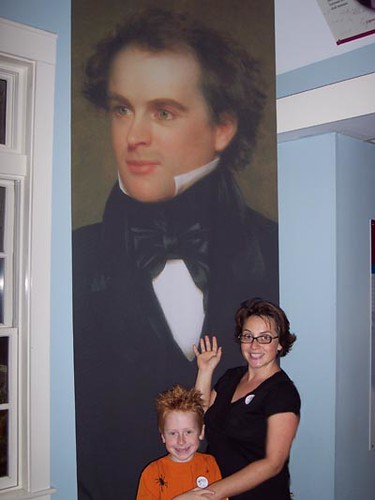
I read this book when I was in college and then reread it in graduate school. I love it. Love Phoebe, love Hepzibah, love weird old Clifford, love enigmatic young Holgrave. Love daguerrotyping, whatever it was. I embrace the sentiment, the examination of the weight of human history and the awfulness of the soul and the impossibility of light in a populated room. I even love Thomas Pynchon, on whose ancestors these characters are based. I am, you might say, a fan. This is me with Nathaniel Hawthorne:


Yes, he looks kind of two dimensional and like he's not paying attention to me enough, and yes, that is my child there, my child with my husband, who lives here with me in the 21st century, but... Hawthorne and I have a special bond. I'm the only one in my American Lit class in high school who actually *liked* Young Goodman Brown, actually read My Kinsman Major Molineaux, who didn't buy the "good vs. evil" explanation that was being spooned out by Miss Cardimone to the rest of the class.

By the way if you're reading this and I knew you in high school, assume you weren't in that class. I'm looking at you, Ann. Any disparaging remarks do not apply.

I loved Hawthorne, and Melville, and Poe, and the way Melville loved Hawthorne, and the way Poe hated everyone, and how they wrote to and about each other, and how they all spat on Emerson, and his ilk, and pooped in Walden Pond, and dug around in their dark hearts and and wrote about what they found.

Last week I was in Boston. My husband suggested we go up to Salem to see Nathaniel Hawthorne's birthplace and the House of the Seven Gables. I was, of course, panting with excitement. Wouldn't you be? Except that I'm serious.


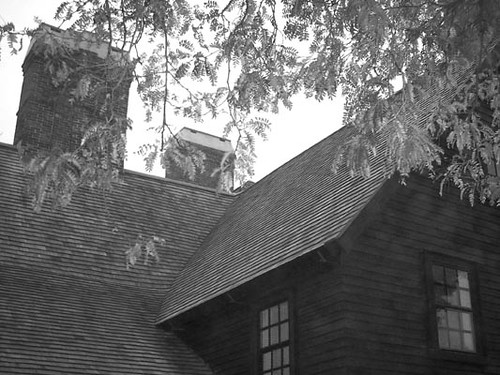
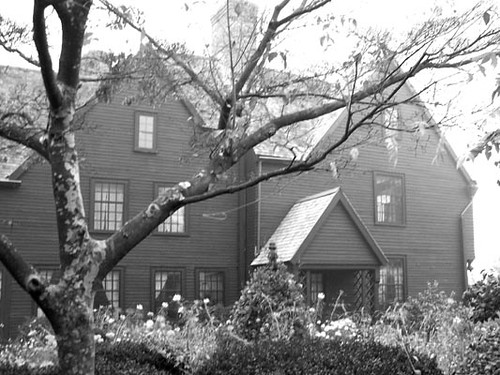
This is the House of the Seven Gables. It is the house on which Hawthorne based the house in his book. The house that represents original sin. This is it. He visited it as a child; it was owned by relatives of his. It's been restored, in fact restored to be more like the one in the book than the original house actually was (Hepzibah's store was there, and there is also a secret and terrifying passageway up through the chimney).

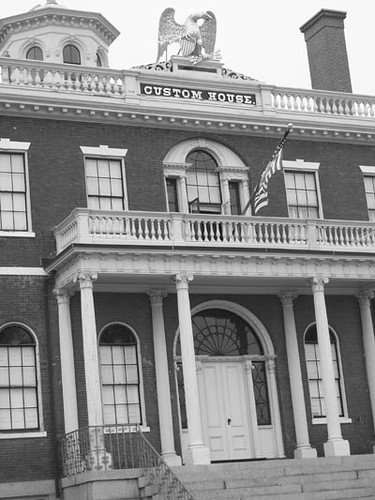
On the day we went to Salem, it was foggy and chill, although the rest of our week in Massachusetts was sunny and breezy. We walked all over the place and then down to the harbor where the Custom House is, where Hawthorne did some writing:


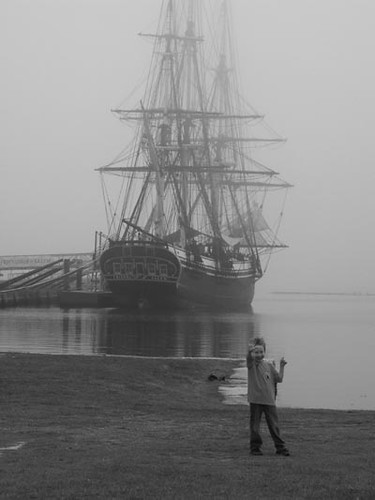
Here's the USS Friendship, across the street. And my son:


The house was neat, interesting, educational. So was the house in which Hawthorne was born, which is also on the property, having been drug there from five blocks down the street in order to add it to the museum. It was a historical site, well-preserved, well presented, valuable.

Now, I hesitate before exposing my soft underbelly like this, but I must say that beyond the interestingness and the educationability of it all, I got a little misty thinking about the history of the house. Considering Hawthorne sitting there in the parlor, about the book he wrote, about the period of time he wrote about, I found myself swallowing hard and wiping my eye.

They had only recently rid themselves of the British, and they were living in a brand new country. It would have been so vital, so fascinating, so *patriotic* and so important, to create this new national identity in literature. I know, I know, I had read about this before too, and I knew it in my brain. About how James Fenimore Cooper and Washington Irving drew dark lines around a colonial asthetic. But until I was standing there in Massachusetts, having walked through the South Meeting Hall in Boston, where they had the rabble-rabble meeting before the Boston Tea Party, having looked at Paul Revere's Grave, having stood on Bunker Hill, I did not get what they were doing, those people up at Brooks Farm and in Concord and what it meant while my boys were pissing on transcendentalism -- it was more than just ideas, it was identity. I get that now.

I have two reactions to that: one is that I need to think more about what I'm writing and why. What are we doing here? Do we still take up a black marker and make bold outlines around American literature any more? Are we all just happy to be citizens of the world? The other is that I wish more urgently that I could have been there when Melville walked out of that Emerson lecture, when Poe wrote that criticism of Hawthorne, when Hawthorne was sexually rejecting Melville.


At least I got to go to the house. I knocked on the front door, climbed around under the rafters, put my hand on the original bricks in the fireplace. I wouldn't have thought someone mean and cynical like me could be moved by such an experience, but I was. Next time, we're going to Concord.

Saturday, October 13, 2007

Take the Books to Disney World! Take them to Disney World!

Who wants to take a ride with me on Cinderella's Golden Carousel? Now put your hand down if you're not made out of literature. I’m going to take ten books to Disney World. Books that deserve it. Books that need it.

I have been trying to read Doctor Zhivago for several months, and between the lengthy surnames and all the railroads going this way and that, I am ready to conclude that what this book needs is to get out of Russia for a while. To ride the spinning teacups. To meet Donald Duck.

I can think of lots of books that need a trip to Disney World. Heart of Darkness. Bleak House. How about As I Lay Dying?

My books spend most of their time spread open, lying upside down. Periodically they get shoved into the diaper bag, where they get drowned in apple juice, squashed with M & Ms, and have to babysit Barbies. When I’m finished reading them, I publicly criticize their authors, make fun of their movie versions, and snicker at their cover art. What kind of life is this?

I’ll tell you another book I’m going to take to Disney World: Anxious Pleasures. Lance Olson’s publisher sent me a review copy months ago and I’ve been belligerently sitting on it, waiting to reread The Metamorphosis before I read this rewrite. A few rides on Space Mountain should put things right.

I’m going, I’m really going, in the middle of November. I might even take my children. But will I be able to get Ariel to pose with Moby Dick? Will they fine me for littering if The Bell Jar throws itself off the ferry railing? Will The Sun Also Rises get kicked off Small World for shouting at the animatronic children?

Do you have a book you think needs a trip to Disney World?

Wednesday, October 10, 2007

What the World Needs Now is Another Literary Magazine Like I Need a Hole In My Head

Literary magazines, the time has come that we all knew was coming. It’s over. It’s done. The lady in the Viking corset has belted out the final high C sharp. Please exit quietly at the rear door, but leave your plastic 3D glasses in the bins provided. You will no longer be hosting the revolutionary planning sessions. The revolution already happened, and at someone else’s house.

You had a good run. Well, not really, but for the sake of politeness, we’ll say that you did. I have no ill will. I have no desire to wound you in these, your final hours. You once served a purpose, but the purpose is extinct, and so are you. No more glossy coverstock. No more precious author bios. No more black and white photography opposite poems about rain on the window pane and how it’s like roads. No more “This page purposefully left blank.”


I’m with you, and we can go through this together, but let’s face the facts. Literary magazines used to exist for two reasons. The first was immediacy. Rather than waiting for the long, grinding, seasonal cycle of big traditional publishers to get new books on the shelves, readers could find fresher fare in literary magazines, published quarterly, or even monthly. The second reason was for content, as literary magazines reached farther out of the mainstream, farther into the margin, to pull new writers, strange writers, uncommercial writers, into the world of print and out to the world of readers.

Now we have the internet. Do I need to explain, or would it be too painful?

With web sites enjoying daily updates, the old publishing schedule of even an ambitious quarterly magazine now seems yawning and slow. My attention span stretches approximately to the update cycle of The Onion, and then shatters into a thousand pieces. Are you publishing your literary magazine twice a year? Are you kidding?

Then there’s the content and readership. Any brilliant, strange, new, marginalized writer with a Blogger account and a willingness to network can gain far more readers than any literary magazine was able to reach in the history of time. In fact, any jackass with a LiveJournal can reach more of an audience than most literary magazines have ever boasted, even the big ones. I’ve been published in respectable, established literary magazines that I bet fewer than a hundred people actually read. And that is true. Hold me. It is true.

Then there’s the subject of money. The internet is, mostly, free. And well, you know the rest.

So, really, do we need another literary magazine? Just one last really special one? Do we need to hear about how this publication is different, this one is going to be a “really beautiful object,” this one is going to change publishing forever? Do we need to hear from another self-congratulatory editor-in-chief, lovingly stroking his in-jokes, musing fondly on how many subscribers he’ll need to break even, figuring out how to woo in another bored midlist author to showcase in the autumn issue? How about one more magazine named “BRICK” or “PHYLACTIC TUNA”?

Let’s admit it, we were all there at one time. Graduate school can make you feel like that. I freely admit that I, with milk-white hope in my shiny heart, at one time published a collection of short stories written by a friend of mine, and got it placed in local bookstores. I think I was twenty-two. It was fun to play pretend that way. But for the love of Kinko’s, as grim as it may sound, you have to grow up.

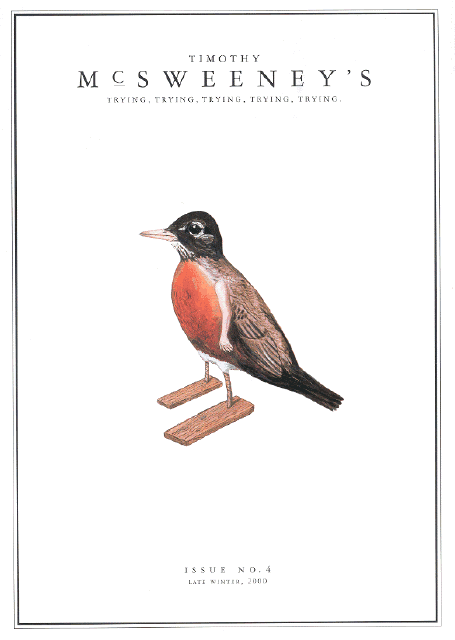
Enough is enough. You cannot change the world with really expensive paper, you cannot revolutionize literature by being “more ironic than McSweeneys” (is that even possible?), and you cannot sell a literary magazine. Literary magazines are not books, no matter how you try to fetishize them, they will never be on the shelf with the novels. They never have and they never will. Literary magazines are the cousins of newspapers. Novels are the cousins of history.

What can we do? I would call for a boycott, I guess, but boycotting literary magazines would be like boycotting sandpaper pants. Nobody’s rushing out to the stores to grab them up anyway. The sad fact is that nature will take its course, and these beautiful, exotic creatures will be eaten by literary evolution. But will anyone survive?

The lumbering giants will survive: The Paris Review, Ploughshares, Triquarterly, etc. These are the litmags you have to get in because they put a big gold star on your resume, and they will survive because of their prestige and tradition. People still want to break their heads open on the editorial boards that published Jack Kerouac, Flannery O’Connor, Samuel Beckett. We’ll eventually be using The Paris Review to line the fork drawer, but not yet.


Which brings us to blogs. Remember zines? Blogs are the new zines. People used to staple together mimeographed pieces of crap in their grandmother’s basement and distribute it via copy machine, coffee shop counter, and word of mouth. They were subversive, populist, and updated instantly on the whim of the publisher. Blogs are the zines of the new millennium – now instantaneous, with open access for all. With all of this magic at the other end of a short wire, is it really worth our time to go around trying to sell paper and glue for ten dollars a glob?

It’s time to stop the presses. I know it’s not easy to pull that plug. Litmags are icons of intellectual privilege. You have to fight against a lifetime of programming that’s telling you literary magazines are good, therefore more literary magazines must be better. You respond out of habit, and assume it’s good news, like when a baby is born. It’s not. Magazines aren’t babies. In the world we live in, we need literary contraceptives. So stop. Put down the telephone. Put down the really nice pen. We don’t need another literary magazine. Literary magazines are dead.