Pages

Showing posts with label contemporary. Show all posts

Wednesday, August 29, 2007

Billy Bathgate by E.L. Doctorow

I am not interested in mafia stories. Or crime stories. I have not read anything written by Mario Puzo and just between you and me, even the movies don't thrill me. Why did I read Billy Bathgate? I picked up this book at a bookstore when I there for an event and wanted to patronize the shop. Didn't matter, the shop went under a few months ago, leaving me with the book but no guilt. I tried reading it aloud to my husband on a long road trip. He is a fan of books about organized crime. However, the sentences were too long and convoluted to read on the interstate while trying to shout down Buzz Lightyear on the DVD player in the back. Dean Koontz can be hollered in a minivan and the quality of the experience does not suffer. This book, not so.

The book rode around with me in the car for a while.

I took it on vacation this summer in a bag of books, and when Ahno ran out of her stash I offered her a choice: Iris Murdoch, a children's book by Luc Besson, a children's book about squirrels, Doctor Zhivago, or Billy Bathgate. She picked Billy Bathgate. She read it, and her assessment was that it was a portrait of a world without a god, a world without redemption, where there is nothing higher than the top of your own head, and you therefore roll around in the filth that humans create, and know no better.

I don't know about that. I just do not care very much about crime and this glamorous romantic lifestyle and the moral relativism does not impress me or even horrify me. Not even window washers plummeting 20 stories and still having the strength to crawl one inch -- not even that really horrifies or engages me. What lit me up in this book was the writing. Sentence by sentence, word by word, the gorgeous intense memorable language. Not the subject matter, at all, which is even more proof of just how brilliant the writing had to be.

I have loaned the book to Susannah to read but when I get it back I will put an excerpt in about driving through the country in the dark. The main character was born, raised in Brooklyn, has never been out of New York City, and his first experience with nighttime in the countryside, he characterizes the dark as a loss of knowledge, the strip of white down the center of the road, illuminated by headlights, as a strand of life down a gaping abyss.

Over and over, there was a description, a paragraph, even a phrase that made me want to scribble something gushy in the margin. Whee! It was fun. Like finding gems buried in the sand -- the drab, dry sand of prohibition, depression, the rackets, the men in suits, etc. I liked it because it wasn't gritty, because it wasn't real, it was glamorous not only in the rich broads and the racetracks and nightclubs, but in the thickness and intensity of all the language.

The plot arc? Phooey. The ending? Bordering on dreadful. But it didn't matter.


Tuesday, July 31, 2007

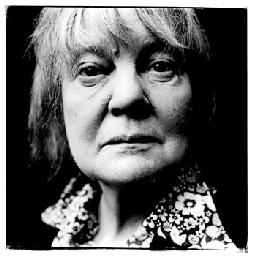
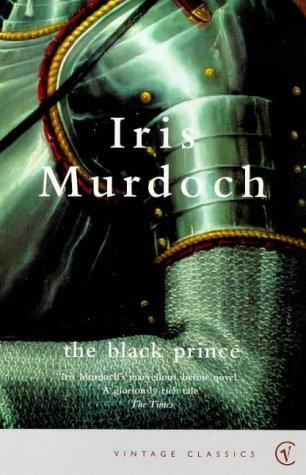
The Black Prince by Iris Murdoch


When I acquired The Sacred and Profane Love Machine I also acquired The Black Prince, and when I was disappointed by the former I was still determined to try the latter. After all, Iris Murdoch has been so effusively praised by people I respect. Maybe the first book was an anomaly.

I read a few chapters of The Black Prince and had trouble going on. Everyone was so unsavory. Everyone had a hole in their stockings and a bit of pink marbled flesh protruding. Or greasy hair. Or was pallid and sweating. I mean everyone. With one exception, the entire cast were middle aged English people, ruthlessly portrayed in all their greying sagging glory by a middle aged English novelist, the main character, Bradley Pearson. Everyone was foul and mean and preoccupied and irritable. But not in entertaining or interesting ways -- in ugly little sour ways. Halfway through the book I was just having to force myself to continue. After all, Kate Winslet played her in the movie based on her life. I owed her at least to finish the lousy book.

I will tell you that the book improved dramatically halfway through, and continued to get better and better as it bounced along toward the ending. And then I will tell you that the ending really did redeem the whole book, made it very retroactively interesting in terms of what a writer is, what fiction is, what "truth" is, what a reliable narrator is and isn't, and other complex questions.

The book is very smart, and it does at the end pull back its scalp and reveal there is a large and whizzing brain inside, which has been there all along, under that peeling, sparse scalp. The problem here is, friends, that you have to read a whole lot about the ugly and small agendas of a lot of people you'd rather not get to know, in order to understand the point that's being made about art. As to the apparently thrilling (to critics) question about whether or not the narrator is a homosexual in denial, I don't think that's really interesting or relevant. I'd rather hear more people discussing whatever the heck happened to him at the end, and who P.L. was. All that seemed much more mysterious than the gayness. But then, discussions of whether people are gay or not don't tend to fascinate me (take note, friends, this extends to Herman M.).


The Black Prince is a book I enjoyed having read, but not a book I enjoyed reading. It is an experimental book, all the more so because it appears to be a very traditional book. Things are not always as they seem -- take heart if you are toiling through this novel by choice or on order from an educator -- there will be a payoff, and it will all end eventually.

Wednesday, June 13, 2007

The Time Traveler's Wife by Audrey Niffenegger


For the first 250 pages of this book, I was wondering, so what?

The author seemed content to play with the idea of time travelling, let us know how and when it works in this book, fill in the landscape of the place and the characters, and just let the novelty of the concept pull us along. The characters, they are so sensitive, so learned, so eloquent. The scenery, it is so hip, so rich, so Chicago. And who doesn't love time travel? Especially when you don't have all those annoying scifi considerations like logic. Sure, the character can meet himself in the past. No, he doesn't change the outcome of his own life, except in small, poignant ways. Everything is convenient, this is literature, not science fiction, it doesn't have to jive like it would in a Ray Bradbury story. Time travel is so interesting, when it doesn't have to make sense. Surely that would be reason enough to keep turning pages.

Apparently, it was. But I was waiting for the engine to engage, waiting for the coconut husks to go up in a blaze, waiting for myself to start to care. There were three things that bothered me in this beginning half of the book. First, I was unable to fully digest the fact that he was visiting his wife as a six-year-old. That is, she was six. He was thirty-eight. He held her on his lap. That was weird for me. Second, there was a glancing mention that whenever he met up with himself in the past and had a spare moment, he was... somehow masturbating? With himself? Or something? It was just a suggestion, and nothing was ever shown, but it was a haunting one. Third, the suffocating elitism of the characters, their artiness, their social status, it was all so precious. As if, of course, these characters are worth caring about -- look at their travails -- and they read Borges for pleasure! Naturally they, they, these beautiful souls, must feel things more exquisitely and tragically than the rest of us fools. Imagine if time travel had been wasted on a troglodyte like me. I might not have put it in the proper literary context, given my lack of ability with French.

Then, I think it was on page 259 of my paperback, the engine engaged. 1. Henry has never come back to the past from beyond the age of forty-three. (What happens at 43? Does he die or is he cured?) 2. Henry has to stay in one place long enough to get through a wedding ceremony without blinking out of his clothes. (He can't control the time travel and he arrives naked returns naked. He leaves little piles of clothes behind him. Stress seems to activate it.) 3. Henry and Clare want to have a child. (Will they be able to? Will it be a time traveler?)

Everything after that was much much more interesting. And at the end of the book, I was very moved. And very invested. And all that stuff. After it was over, I found myself missing Henry and Clare, with all their intellectual nonsense, and all their tragedy. I moved on to another book, but I would have happily read this one for 500 more pages.

Niffenegger invented a new reason to be sad in a relationship. And illustrated it beautifully. In some ways, I guess you could say that this time traveling, meeting up in different stages of life, coming and going, sometimes synchronizing and sometimes missing each other entirely, is a metaphor for all relationships and the ups and downs thereof, but I'd rather see it as something entirely other, with different rules, different reactions. Something I could never experience. I really respect Niffenegger's bravery in tackling this complete mess of material, and her competence in organizing it into an accesible narrative. Makes me feel shame for being baffled by my much-less-complicated novel. It will be interesting to see what she tackles next.

Wednesday, May 23, 2007

Reading Lolita in Tehran by Azar Nafisi


This book is a memoir about life in Iran. Its formal structure expands from the discussions of a secret book club that meets in the author's living room in Tehran to read and discuss banned books like Lolita, The Great Gatsby, Daisy Miller, and Pride and Prejudice. Beyond the book club, the author reminisces about life before, during, and after the revolution, the ascendence of the Ayatollah, and how life became so wretched for women in this country that was once so progressive.


The first fifty pages of this book I really disliked. I find the descriptions of the book club meetings overly precious and romantic, all the "magical mornings" and the "they bloomed into color" and how she dwells on their separate personalities. It all reads as very contrived, to me, since she said in the beginning that none of the characters were actually characters, that they are amalgams and distillations of actual people, renamed, combined, separated. So why dwell on each invented person's invented personality, especially in a "memoir"? I kind of liked her reading of Lolita. She is painfully aware of how her critical perspective is informed and skewed by her identification of Humbert as the Ayatollah, though. Which is good. But I'm not automatically receptive to feminism, even coming from someone in a chabor.


Then, for serious and for real, it started getting good. I think the beginning of the part that made my ears perk up was the anecdote about Nassrin (I think it was her) missing class and then coming back to report she had been jailed for 48 hours because the morality police had accused her of having "A Western attitude." And then CANED her for it? Lord. Makes me want to smack crabby academic feminists in this country in the head and say, "Dumbass, you think you've got problems?!" I realize that's probably irrational, but that's the reaction I had.


The Gatsby section I liked much better. I am flabbergasted by the way the Muslim fundamentalists and the Marxist extremists collaborated on the Islamic revolution. I had no idea that was going on -- how Marxist women in combat fatiques with shaved heads and totally, like, hardass communist ideas (communism being ideally genderless, in terms of all proletariats being equal) putting on VEILS to help the revolution, just because they wanted the Western influence out of Iran. Like, how shortsighted was THAT? Has to be one of the most idiotic political choices ever. You can just imagine some avid Marxist... and that "Adopt the veil to rid us of the West" speech must have been the last one she ever got to make in public. And the last time she got to walk down the street without her husband or father to walk behind.


The book makes a clear distinction between the people who had always been devout Muslims and those who adopted more extreme religious beliefs in order to gain political or social power. I think it's obviously necessary to separate people serving God in an honest and arduous way from people consciously using religion to oppress each other. I also, though, believe that what's corrupt at the top can be honest at the bottom -- that is, that there are people who virtuously and sincerely believe and follow oppressive rules because they genuinely believe that God wants them to, when in reality it's the people up at the top of the religion, handing down these strictures to enforce their agendas. So who to blame? There's a very blurry line between those who are conscious that it's all about power and control, and those who are blind to the human element at work, and only see God's will.


I have to believe that it's impossible for me to understand anyone in that part of the world -- totally impossible, because my cultural context is so foreign. So for me to look at those public virginity tests and say "What the hell!?" means nothing. Of course I can't understand it, it's beyond my scope and outside my experience. What's good about this book is seeing that there are people within that system for whom it is repulsive and horrifying as well. And not just those who have been to America and seen the contrast.


I stalled out reading this when I was still on the James section. I'd inadvertantly started reading about 10 books... forgetting I was already in progress on others that I'd just left lying around the house or car. I wanted to finish this, to get to the Jane Austen section, but I accidentally just read Persuasion instead.

Wednesday, April 11, 2007

Child of My Heart by Alice McDermott


Wow, this book was so uplifting and hilarious, I think I'll go and kill myself now! Hey! If you ever wondered whether children get the shortest, sharpest, boringest end of the stick in life, this book if your proof. If you belligerently insist that people are essentially good; adultery, abuse, neglect, and disinterest in their children notwithstanding; then you too can cling to the adolescent narrator for comfort. She introduces fantasy and love into the lives of all the sad little children she knows, and she knows only the saddest of little children. In the end, most of them survive. Survive to continue to endure the effects of their parents' ignorance and selfishness! Hooray!


This book makes me look around and feel profound gratefulness for my big pretty house, my loving husband, and my two healthy happy children that I adore. It makes me feel lucky that I had parents who loved me and a cool nanny who played silly pretend games with me.


Here's something funny: The book itself references the maudlin sentimentality in which some books about dead children indulge. The Publisher's Weekly review of this book accuses it of indulging in maudlin sentimentality. I can't find the exact quote in the book at this moment, with my daughter sitting on my lap helping, but I remember thinking, "Hmm," at the time.

Wednesday, March 21, 2007

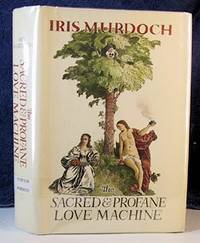
The Sacred and Profane Love Machine by Iris Murdoch

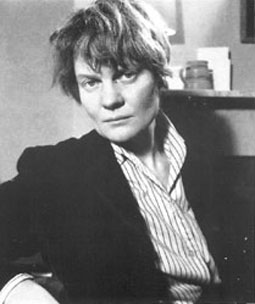
Everyone always says, O Iris Murdoch. Brutal, brilliant, irascible Iris Murdoch. She is so blazingly legendary. I watched the movie, "Iris," as I do slavishly watch all movies Kate Winslet graces, and I realized, I am supposed to love her. But I had never read one of her books, though I always meant to. Recently I picked up two Iris Murdoch books -- this one and The Black Prince, from a friend's book trading shelf. I was, I am sorry to confess, underwhelmed. Now I will say that I read it with great interest and at times felt very can't-put-it-down. But it did not delight me.

This book was brilliant realism. It was about a love triangle and some children were involved. One of the characters, Montague Small, was original in my experience -- I have not met a character like him before. There was a lot of anguish, and a depth of experience that was engrossing. I can't say I enjoyed reading the book. Taking a step back from the oppressive entanglements and all the emotions, I realized that the same characters and landscape, in a P.G. Wodehouse novel, would be hilarious. It is, in a way, bizarrely the same universe. P.G. Wodehouse is brutal, but so deeply cheerful. Murdoch's treatment is so close, so smothering, so dark. I was expecting more of the satire, less of the despair.

I will move on to The Black Prince -- I've already started it. It's hitting me a little like Humbert McHumbertson, so I dunno if I'm going to get the haw haw haw I'm looking for. Having read such a staggering lot of P.G. Wodehouse, since I was a little kid, and seeing the British upper class skewered in this very la-la pass-the-port way and hasn't everyone got a ridiculous name, it was maybe good for me, or something, to see this grittier and less raucous version of it. I mean, it's probably considered obscene to even compare these two writers, and I'll be met outside by a few stern feminists and beheaded for failing to appreciate Iris Murdoch. I said I would give her another shot. I have the next book in my bag. 'Kay?

Monday, February 26, 2007

Girl Imagined by Chance by Lance Olsen

First let me say that I read this book very quickly and kind of hungrily. It has a very specific voice and a kind of ethos that was very addictive, when I was reading it. I came away thinking, wow, what a masterful control he exhibited over that mess of material. I have to stand back and sincerely congratulate him for that. This book was deliberate, measured, never even remotely hysterical, unrigorous, or disconnected. I kept examining the method he used to get there, and found myself focusing on specifics. Sentences were manipulated in consistent and repetitious ways. For example, I remember specifically the quote, "Moving is as easy as changing your mind. Changing your mind is as easy as moving." That construct recurred. The narrator kept saying that some word or other was "perhaps too strong a word." There were a variety of different language constructions that made the book feel very specific, very contained. Like repetitions of objects or behaviors, like what the characters were eating or how they moved through their house. The "Snaggy Scree" bar recurred. (Which led me to look up "scree," and it means "bunch of little rocks around the foot of a mountain.") I found myself fascinated with these little manipulations, because while it *seems* like it would become tiresome/obvious/heavy, they were sprinkled in at a wavelength that just barely allowed you to forget about them before they popped up again. So they were comfortable, like being comfortably inside the book. Very well done. I can't think when I've seen second person present tense successfully managed without being kind of hyper and indulgent. This may have been the key to it. Control. Well, imagine that.

The book is about a couple who move from urban New Jersey to extremely rural Idaho, and take advantage of their safely remote location to invent a pregnancy and a child, satisfying the folks at home who are sufficiently distant and can neither verify nor disprove their claims. Apparently the pressure to reproduce (produce?) is really really intense. The wife is a photographer. The husband is a writer and web designer. The grandmother they are placating is supposed to die soon, but will she die before they have to make a visit?

The story is told in 12 sections, each starting out with a photograph, first of the wife, then of the fake baby. The book forces its "you" character to examine questions of authenticity by examining these old photographs of his wife as a baby, now faked by him to represent the fake child. (And in a secondary (tertiary?) way faked by the author to represent this fake autobiography -- WHEW!) What are they now? What were they then? He is examining in his own work the life of Virginia Dentatia, who died making the point that a human female body cannot survive the surgeries necessary to literally look like Barbie. So there's that. Real, fake, remembered, imagined, felt, dreamed, produced, reproduced. I thought it was acutely interesting to compare photography with having babies. I thought the whole book was extremely smart, very challenging, and also very grounded.

My only difficulty probably stems from the fact that I am a mother of two small children, and yes, I used to live more the "life of the mind" and yes, I do live now more the "life of the diaper." Am I defensive about giving up my whatever for my something else? Just as the book refuses to draw clear lines between autobiography and fiction (the author is also from New Jersey, living in Idaho, married to a photographer named Andi, and has no kids), I claim the right to refuse to draw a line between my strictly literary response to the book and my personal response. You could say I'm troubled because it's all. so. true. Or you could say I have a really admirable academic distance from the topic. Either way.

The narrator indulged in a lot of whacking away at some easy targets: kids at the mall, toddlers with runny noses, idealistic new parents, etc. The loathing. The eye-rolling. The revulsion. Yes, I do understand that when I am reading a first person narrator, I am not hearing the author's private thoughts, and I do not obviously blame Lance Olsen for this narrator's lapses into this kind of minor meanness. I like Lance Olsen a whole lot. But those pot shots did color the way I read the rest of the narrator's ideas about children and "reproduction" -- the fact that the examples he chose to use were so obvious and so thin. Show me a traditionally beautiful example of parenting and point out its weakness -- I love you. Show me a hackneyed example of of weak parenting (kids at the mall: so demanding! so impatient! so irritating!) and crow over it -- not so much. If he had taken a picture of a mother reading to an attentive child, and turned it inside out, shown how it was foul, shown how it was lies, that would be something.

I think any parent reading this book would look at this narrator and say, "You just don't get it." As it was, you just come away thinking that it's like trying to explain sex to a virgin -- unless you experience it, you just don't know. I thought for a while that he was going to fall kind of in love with his fake child, and have some kind of epiphanic moment, but thank god he didn't -- that would have been tragic on the other side of the spectrum. I think that the character did have some extremely redemptive moments, and by no means did I reject him based on his feelings about kids with runny noses (who really likes them anyway). There was a character in the book who had a child, Nadie, that I think the main character didn't actively despise. Certainly the wife character managed to pet the kid's hair. Seeing the way the couple responded to this one "good" example of parenting really illuminated how deep the damage was, as manifested in some of the "broken" photographs, that led them to the state they were in. Which was Idaho. And the ability to make up a baby and then kill it. I ended up thinking that in some ways his wife was his child, and he was hers.

This book was a really engaging read, from start to finish. Ask the poor souls who reached me on the phone while reading it -- I was yakking about it to anyone who would listen. The premise is wonderful, the intellect is inspiring, and the prose is so so so right. Buy, read, and rant.

Friday, January 19, 2007

Disability by Cris Mazza

What’s amazing about this book is that Mazza can unfold such a tiny piece of the world into such an interesting shape.

Her characters aren’t talking politics in Madrid, they’re not having epiphanies in the desert, and they’re not redefining cyberspace. They’re small women in a small part of the world, doing an insignificant job, governed by an insignificant boss, serving people who can’t respond. Instead of choosing, for her subject, people who usually find themselves being written about (those who are categorically superlative in some way – hidden or otherwise) she chooses two minimum wage nurse’s aides in a hospital for the severely disabled. Mazza doesn’t glorify these lives –she doesn’t give them secret insights or hidden depths. They remain, outside the book, invisible. They do not articulate their own ideas about their lives or their problems. They do not triumph and they are not destroyed. What's superlative about these women emerges in a small flower for a short time, and then fades. But it emerges in excrutiating clarity.

Part of the fascination of reading _Disability_ is in seeing “behind the scenes” in an unfamiliar setting – in this case the hospital, where the children have names like “Boardboy” and “Scooterboy” and the characters detail their experiences with the work. The administration is predictably idiotic, prescribing hearing therapy for deaf patients, and most of the aides are lazy and neglectful. This book, however, is not about how severely disabled people are treated in state hospitals. The book is about taking two women, really any women, *any women at all*, and finding a story in them, finding “enough” for a novel – proving them “worthy” of having a book written about them. It’s about taking up a hypothetical challenge – I dare you to write a book about *these two souls* and doing it in a way that had me turning pages intensely and reading at stop lights.

It may surprise you that the book is so compelling, given its small and honest scope, its lack of irony or plot twists. This is a story about women, told by a woman as only a woman could truly tell it. I think it’s exactly what we heard about in “A Room of One’s Own” – who cares about what the Prime Minister is doing – we want to hear about the girl behind the counter at the hat store. I think Virgnia Woolf would be very proud.

Monday, January 1, 2007

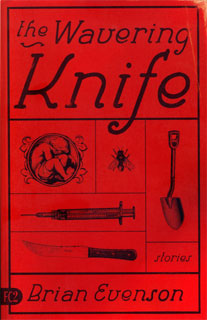
The Wavering Knife by Brian Evenson

One of the best things an author can do for you is to leave you with an image that you'll never forget. Short stories do this for me more than novels, I think. From novels, I mostly take away characters, or a general feeling of the novel's place or a memory of its stylistic affect. From poems, when I read them (which I try not to) I am sometimes left with a memorable line or even a word. Short stories, though, deliver a single frame -- like the ranting in the doctor's office waiting room from Flannery O'Connor. The bent translucent form over the candle from Melville. The throbbing floorboards from Poe. Recently I remember remembering the one-armed man in the tree, pruning it with a chainsaw, from Karen Brennan. (Of course there are those memorable moments I'd rather scrape from my brain, like every scene in any movie that helpfully features a person being burned alive. Thanks Hollywood!)

From Brian Evenson's collection, The Wavering Knife, I am left with a residue of images I have never seen before, and that's saying something small, but significant.

Half of these stories are brutal, relentless, and cold. The other half (and I don't mean exactly 50 percent, but *some*) present a lighter, more ridiculous fare. The latter and lighter group are about silly men and the dumb things they do and say -- from the Promisekeeper group that meets in a bar to the guy who tries to set up a church in Walmart, to the pair of redneck gravediggers who have so much trouble getting their corpse into a shallow hole in hard packed dirt that they chop him up, pee on him, eviscerate him, stomp on him, and eventually throw what's left of him into a ravine and pretend to cover up the grave. What happens next? The family and minister come over the hill, with the coffin he was supposed to go in, asking to "dig up" the body. These stories, though smart and wry, are not my cup of irony. The other half of the book, however, is priceless. Evenson's great accomplishment, his genius, lies in these other stories: "The Ex-Father," "The Intricacies of Post-Shooting Etiquette," "The Wavering Knife," "Virtual," "One Over Twelve," "The Progenitor," and my favorite, though it isn't the showiest story in the book, "House Rules." "House Rules" affected me the most, though it is quiet and drab, and the image of the velvet rope across the stairway will stick with me for sure.

Maybe these stories are evolved Kafka, or maybe they're perfect scifi. This is a fiery imagination kept rigidly contained in exacting boxes, let out in discreet units, each one perfect and with a strange serenity. These stories take you in utterly, and then truly reward you, like magic tricks that really work. I can't really give you any plot nuggets or summaries for these, because they don't work except in their own context, provided by the stern, rigorous language and the limitations of the prose. They're so strange and explosive in the ideas that drive them that they need Evenson's specific containers to make them conceivable. Story after story I would finish and then say, "That was so WEIRD. And FABULOUS." Then I'd hungrily go on to the next.

It's not surrealism -- everything is true within its own law. It's maybe alterealism. Whatever it is, it was enormously engaging and challenging to read and halfway through I was already thinking in my head of people I know who would love a book like this. Definitely read it. A small black rendering on a blank tablet, of something truly different, is more intriguing than a dense and colorful mural, six blocks long, of something we already know.

I met Evenson a long time ago at a conference in Denver, and I can't remember much about that conference, including meeting Evenson, except that I know I did and that he had kind of a wild aspect. He looked more like the book jacket photo on The Wavering Knife than he did this photo here, but I'll include this more respectable one since he's now the Director of the Literary Arts program at Brown University.

Thursday, August 3, 2006

The Blond Box by Toby Olsen


Here we have a book that I don't fully understand. However, I feel like I probably would understand if I really thought about it hard enough, and read enough ancillary documents. Possibly I'd need a good night's sleep and a Coke. It's all wrapped up in the artwork of Marcel Duchamp, and it takes place in three different times -- 1949, 1969, and a hypothetical 2069, which actually takes place in one of the characters' scifi novel. The most interesting thing to me about the book right now, and I'm about 50 pages from the end, is how the events in this scifi novel strangely mirror the events in the 1949 part... I like that kind of shadowing. It's also kind of a comfortable read, for me, because I feel like this is familiar territory in a way, and I don't really feel the need to scrub my eyes, refocus, and understand every line. I have to tell you that when I read the first few chapters, and began to formulate my reactions in my mind, I found myself saying something which is probably very crude and unliterary and wrong -- yes, another FC2 type of book, in a phrase: Poop and penises, lovingly described.

Here are some links about it, written by people more diligent than I apparently am, who have perhaps had more recent sleep or fewer recent toddlers:

Golden Handcuffs Review, if you scroll down past the poetry, has two book reviews of it and then a possibly related (?) piece by Toby Olsen with an amusing first line.

New Pages has a review of it.

You can't discount a book with a Robert Coover blurb on the back, can you? I get the feeling that Toby Olsen is a very entertaining guy to sit next to at dinner. I'm just a little weary, at this point in the book, of the different ways of saying that prostate pain is like a knot in your testicles.

************************************

I am not into saying bad things about small press writers. However. One of the main characters spends the last 100 pages wearing a diaper. And the narrative not only refers to the diaper constantly (as in, "He shifted his diaper.") but also has the character feeling the urge to urinate, and then urinating painfully into the sand. Like... all the time. This character must have been pounding 40s right off camera, because he peed more than a male dog on a walk down fire hydrant alley. So... I'm not weeping or anything that it's over. It was an interesting book. It made me, at the end of the day, feel a little bit dumb about my ignorance of contemporary art, and a little bit tired of the whole diaper/prostate/urination/testicles thing. Husband postulated that the thing was maybe revised on a laptop in a urologist's waiting room.

BUT! It's a unique interesting book and I'm going to write a positive review of it. I'm sure Olson's other books aren't quite so relentlessly crotch-o-centric.

***********************************

The story takes place in three different times... 1949, 1969, and a fictional 2069, where characters in a sci-fi book being written in 1969 follow a parallel storyline to the plot unfolding in the "real world." Beyond this interesting and unusual structure, the book introduces us to an odd grouping of characters who are engaging and genuine, wracked as they are with various medical problems.

Ultimately _The Blond Box_ is about the art of Marcel Duchamp, and the best function of this odd narrative is providing a thoughtful, hypothetical context for his strange art. It's like a different way to write about an installation, instead of a scholarly article, instead of a critical review, a novel that positions the art in the center of a system that explicates it in the unusual way it demands.

Saturday, July 29, 2006

Forgetfulness by Michael Mejia

When I was gathering my big stack of contemporary fiction titles to read this summer, this was one of the ones I held up to my husband and said, "Oh, for heaven's sake, get a load of this." I thought it was one of those books, that makes you work so hard to "get it", and gives you half a sneer in return, and I won't put a finger on what I'm talking about or give an example, but you KNOW you have read them, I think I've even written some short stories like this, and so I know what I'm rolling my eyes about.

Here's a description from the back jacket:

The first part of Forgetfulness is a fictional monograph on the life of the Austrian modernist composer Anton von Webern (1883-1945).The collage-work monograph unfolds in a Webernian sequence of events and silences combining quotes from Webern, his friends and associates, and various historical and literary figures with short scenes, monologues, dialogues, newspaper articles, and theater and film scripts. The result is a lyrical panorama of early twentieth century Vienna.

The second part of the book takes place in Vienna on May 1st, 1986, shortly before the election of Kurt Waldheim as President of the Austrian Republic and shortly after the Chernobyl disaster. The three simultaneous, intertwining monologues of an archivist, a retired opera singer, and the author of the monograph, revisit the themes and events of the first part, commenting on postwar conceptions, analyses, and revisions of the period during which Webern lived, while continuously haunted by the specters of Waldheim and Chernobyl, the persistence of crimes that are immanent, unpaid for, or only dimly, disingenuously recalled.
There was more. Also, flipping through it, I saw that part of it was divided into three sections on the page, between "Soloist" and "Composer" and "Archivist" and I anticipated a fractured narrative, with time jumping around, and thought it would be a pain in my ass. I MUST BE GETTING OLD. I ADMIT. I WAS CRABBY ABOUT IT! I wasn't really jumping up and down, anxious to crack into it.

WAS I WRONG.

I read this book while I was coming down with the flu, and as sick as I was, and as miserable as I was, and as much as I just wanted to close my eyes and think of clean snow, I COULDN'T PUT IT DOWN. I have never had a reaction like that to a book this experimental. I've thought they were funny before, brilliant before, even engaging, but I have never read a book without traditional characters or plot with such avid determination from cover to cover.

This book is gorgeous. I can't explain it properly, but... it's incredible. That three section part that I was so belligerent about reading was genius. Instead of feeling distracted and irritated, it was actually fun to kind of read around on the page, then turn it, then read around on the next page... the formal experimentation totally worked. And all the mixing of different texts and characters and times and places really WORKED. It formed a picture, at the end of the book, that could have been rendered in no other way. And that's the point of experimental fiction, right, to do something in a new way that couldn't be done in the old way.

It was beautiful, beautiful, ever word on purpose, every image worth looking at, every page a study. This book offers the reader a massive pay-off for the diligence involved in reading an experimental form. The thing is... the challenge in this book is not even like work. Go buy it, read it, see how it's done.

Friday, July 28, 2006

Girl Beside Him by Cris Mazza

I'm three chapters into this and have a few things to say as I trot along:

1. The book is so much easier to read than the others I've read in this summer challenge that it's like eating yogurt after eating mueslix.

2. I think I've figured out Mazza's strength. I've read a few of her other books, most recently Indigenous which was about growing up as a Southern California native. That book is REALLY interesting, for the same reason I think I'm interested in this one: Mazza takes you into an unfamiliar world -- like the interior of an orchestra, or life in marching band, or working in a hospital, or in this case a ranching town in Wyoming. Instead of filling you in, in some patronizing irritating way, on the way things are, she just lets the way things are penetrate the text. So, you have this feeling of keeping up with the book, and figuring things out as you go. Like playing a game without a manual, and you know you'll just figure it out. the novel is very confidently, firmly written, so you don't have to think, well what's this lingo? What's going on? You just get immersed. It makes her books very memorable too, because you feel like you learned something -- that sounds so dumb -- but you feel like you learned something via experience, not via information.

3. All three of the novels I've read have to some degree been about filing in the lines of a mystery that's in the past. In this case it's something with the main character's sister and mother. It makes me very aware of the line being tread between giving the reader a mystery to unravel, and playing "What have I got behind my back" with the reader, rationing out clues and past scenes in just the right doses. This novel is coming from a lot of different directions -- it can kind of make you feel like skipping forward through the past sections. I suppose that's what it's like with any book where the past is a mystery.

*************************************

Reading a book by Cris Mazza is like being set down into someone else's life. This is what novels can do for you that non-fiction books can never do. It's what novels should always do, of course, but Mazza does it so expertly that picking up another of her books is like preparing to go on a trip. There's that same anticipation. Whether it's the world of dog shows, or inside a rehab hospital, or playing in a symphony, or in this case doing wildlife research in the badlands, the immersion is immediate, complete, and seamless. Instead of holding your hand and patronizingly explaining the details, Mazza just slides you in next to one of the characters, and the life you're living unfolds with the natural progression of the plot. Would I ever have known all the details of playing in a marching band, without reading Cris Mazza? Would I have ever thought it could be that interesting?

Another experience this book affords is the ability to like and understand someone that in your usual life you would either ignore or reject. Mazza's main character in _Girl Beside Him_ is rough, irritable, and unpredictable. He's violent and sometimes mean. By all indications, he should be the most unlikeable main character in the history of novels. Not only do you not like the guy, but reading along, you have no doubt that if he met *you* he would definitely *not* like you either. However, by the end of the novel, I was really cheering for this guy, really wanting him to have something resembling a normal, healthy interaction with another human being. I'm not sure, in the end, if I got that, and I'm not entirely sure I understood the ending. However, putting the book down, I felt like I'd been somewhere and had seen something that I never would have looked at before.

Saturday, June 17, 2006

The Garden in Which I Walk by Karen Brennan

OKAY.

On to a collection of short stories.


Karen Brennan wrote several books before this one, notably Wild Desire back in 1990 which was positively reviewed in the NYT Review of Books. Now she's a professor at the University of Utah. She's written five books, total, and she teaches the graduate level poetry workshop at U of U. I'm 100 pages into this book and there's not much left, about half as much again, I'd say. It's what they used to call a slim volume, back when they said that sort of thing. There are a few things I have to say, at this point...

1. This writing is very controlled, very lovely, very fine. There isn't a lot of warbling excess -- it's carefully honed. It reads like poetry, lots of it, and I'm not surprised to find that she's also a poet. Reading these very short short stories, where often what's central is an image, or a situation, or an idea, and not a plot exactly, I'm thinking of this analogy: Handling good writing, like this, good images and interesting phrases and bright language, is like handling a lap full of sparkly jewels. It's pleasurable. Maybe poems are like the loose jewels, unset, just rolling around. Maybe short stories are like the jewels strung onto a wire, that you can wear, but with no interstitial weave or anything, just a sequencing. Maybe novels (I could be wrong, maybe they are nothing like this) are like a beaded garment, where you not only have the pretty gems, but you have to arrange them over a space, and it can't be too crowded or too sparse, and you have to also create the fabric between them, and make sure that fits, and that the seams are hidden. These stories, while all beautiful in themselves, are not connecting together to make anything wearable. I carry them off in my memory as separate things. It's really hard to write a novel. This writing, here in this book, is gifted and at times genius, but I don't think it was *hard* to write this. That's not a criticism, it's just the way the book feels.

2. It's not a good idea, in my opinion, to have a lot of first person stories in a row, all sounding alike. They started to bleed together in my mind, and I felt when I started the next story that I was still reading about the last character. I liked the third person stories best, I think, because the narrators of the others failed to differentiate themselves. I think my favorite was the one in three sections about the wreckage, the face, and the... sleeping. That was very well woven. My least favorite were the most fragmentary ones in first person. I also very much liked the one about the beautiful woman who maims her hand with a chainsaw accidentally. That one I will remember.

3. I was already struck with an example of why I don't usually read contemporary fiction. After reading this book, so rich in the image department, I was outside watering flowers with my little daughter. She had the hose in her hand, looking very picturesque with the little cotton dress and the flowers and her wavy hair. I was just loving watching her and I kept smelling something awful and rotten, and eventually I looked around carefully and there were two dead baby birds under the tree. Baby birds that fell out of the nest and died and there was nothing anyone could do. And my first thought, all seeped in this kind of literary brainjuice was, 'I should write a short story and use that.' Which, of course, wouldn't be altogether BAD. But the right thing to do, if I do use it, would be to work it into my novel... or just think about it and let it filter in. Or blog it. When I was in grad school I used to keep running lists of these "things" you know, what I would call jewels using my analogy above, and when the list got long enough I'd write a story using all of them, forcing them all in together like a salad.

4. Everyone in this book is miserable. Some extremely miserable. It's funny because from the first three pages I thought it was going to be kind of sweet and nice and boring. I think that's why that story is first.

So, on I go to finish and release it. I'm trying to decide whether to email these authors. Seems kind of pushy, like hey, I'm reading your BOOOK pay attention to MEEEE. Heh heh.

Friday, June 16, 2006

Gone by Elisabeth Sheffield

I'm about 50 pages into it.

It's making me ask myself things like... why are books written? Why are books read? For years I have tried not to read anything written in this century, with very few exceptions including material I am critiquing for friends. I have read a few things but in general I haven't, especially I have tried to avoid other "experimental" writers because I'm afraid of being influenced, etc. I know that is not in the spirit of postmodern piracy and we're all very collectively conscious and text cannot be owned or authored or whatever, but this is just me. I read 19th century fiction, or else I read like... Jan Brett books to my kids.

So this is the first experimental fiction I've really read in a while. I have a few thoughts.

I think that readers naturally try to romanticize things. We try to imagine the settings as beautiful (or at least sublimely ugly) the characters as deep and true, and beautiful, and we want to believe there is significance. We're on the author's team, automatically, because we bought the book (or at least we're spending time to read it). It seems to me, and I could be completely wrong, that this author is trying to undercut my subconscious but earnest attempts to romanticize things in this book. I'm not allowed to believe the main character is beautiful or nice or even wise. Smart, she is. The smartness is packed into every crack of every sentence, with extra smartness crammed in around the edges. And a big fat dollop of smartness on top. Maybe it's droll of me to want there to be some romance here, and I mean, gauziness, not like... true love or anything. I want something to drag me back to the book after I eat dinner, make me consider staying up all night to finish it.

This book has a hook -- it's not lacking in a plot question. But I think the questiony lesbiany relationship burgeoning in old letters is maybe supposed to be the hook. There is also the question of whether the main character will find the painting she wants to find. The thing is... she's kind of rough. She puts on sweaty shirts. I *realize* okay? I realize that I'm not being very pomo and whatnot abotu this. But... I feel differently about reading a book where not only does the main character judge how sweaty her shirts are before putting them on, and sit down naked on the bathroom floor in grit, but that the narrative tells me that pointedly, as if... this is the kind of book you are reading, where the women's shirts are sweaty. Like... in your face, reader.

I am going to finish reading this book -- it's a challenge. There is quite a bit of great, great writing in this book, and I will have more to say later.

**********************************

I finished it.

Right about page 100, my interest began to pick up significantly. I started having that urgent feeling like I had to know what was going on and finish the book. That feeling is the reason I read books (the reason most of us read books, I bet) and it was a relief when that kicked in. In my exalted opinion, page 100 is a bit late, and if I hadn't been committed to reading this, I would have put it down.

Having got to the end now, I think I do understand what Sheffield was doing. The book is about how women (as represented by the main character Stella), and also readers of fiction that's been written by a woman, assume that men are the villains, that the central female character (Stella's mother), especially if she is artistic, beautiful and from a disadvantaged background, must be the noble victim. This novel takes that expectation and turns it on its ear.

The novel is a mystery, and the reader has to reconstruct what has happened in this strange, exotic family, and figure out, as Stella puts it at one point, "who hurt who." While Stella herself is trying to figure it all out, from old letters and from talking to key players, the reader is always two steps behind her. One step behind, because we have to figure out what Stella already knows, which she does not openly tell us, and two steps because the style of the Stella sections is so difficult to unravel, almost purposefully obscuring what is already pretty murky. It takes a lot of work to get to the bottom of this mystery, and some of it I still don't quite understand... I just didn't pay close enough attention, maybe, to tie up all the loose ends.

The Stella sections are in present tense, and are my very least favorite type of stream of consciousness, where the character seems to think about each step she is taking, literally, where every motion or breath triggers a song lyric association, where there is just a swirling flood of thoughts surrounding the slightest action. Nobody thinks that much, that coherently (even thoug it reads as incoherent) and it makes for a very disembodied, difficult to picture narrative. The book's strongest sections, however, are letters from Stella's aunt, Judith. Those sections are great, at times excrutiatingly emotional, in spite of the fact that they *seem* to be written in a more detached, less immediate and personal style. I connected more with the letters in their stiffness and formality than I did with the rushed breathiness of the present time sequences.

For those who are willing to work this book has rich rewards. There is a very unpretentious and ungauzy portrayal of an artist who comes off as brilliant and believable at the same time. There are lots of motifs that pervade the book, affecting you on that almost subconscious level where you connect ideas as you read. The idea of the missing eye, for example, resurfaces throughout, connecting with many parts of the book and anchoring the theme of absense, invisibility, and what is unseen but still there. I really liked that. Also the idea of value, of copying, of replication, centered around the Winslow Homer that the main character is seeking and played out in her mother's art as well. I liked the idea on page 135 about how two photographic prints of a nonexistent original could hardly be said to be copies of each other. There were lots of smart, interesting ideas in the book, buried under the 'cuz' and 'gotta' and 'gonna' and 'yeah' language that Stella flooded us with.

Once the book takes a hold of you, its grip is firm. I did not love the present tense sections, but I loved the contrast of the letters from Aunt Judith. They were like islands of great writing in a sea of Joycey crazyland sometimes. I didn't like some of the things that Stella did, that seemed completely irrational and weird (like trying to seduce Uncle Buck or reading her own letter last -- I thought she might read her own letter first, and try to *kill* Uncle Buck) but I appreciated how omplicated the puzzle really was, after all the mud had swirled away. The underlying message, too, I think, is a treasure worth unburying.